
The cola with lunch, the sweet tea someone makes at work, the coffee ordered on the way home: a drink can become part of a routine before you have made much of a decision about it. Cutting back is awkward when the plan says only “less sugar” and the next order is already familiar.
A more useful starting point is to choose one recurring drink occasion and decide what will happen instead. You can do that in a notebook, a phone note, or a habit tracker. The record needs enough detail to distinguish fewer drinks from a bigger bottle bought less often.
This guide explains how to cut down on sugary drinks with practical swaps, portion checks, and a simple weekly review. It covers homemade drinks as well as cans and café orders, without requiring a full food diary.
How do you start cutting down on sugary drinks?
Record your usual sweet drinks, including their size and when you have them. Choose one regular occasion to change, prepare a replacement you enjoy, and review what happened after a week. Track portions alongside drink occasions: fewer purchases do not necessarily mean less sugar if the drinks get bigger. Use the label when you want to compare sugar amounts.
Which drinks should you include?
For this habit plan, a sugary drink means a drink sweetened with sugar, syrup, honey, or another sugar-containing ingredient. Include regular fizzy drinks, sweetened iced tea, energy drinks with sugar, sweetened milk drinks, and café drinks with syrup. Tea or coffee counts when you add the sweetener yourself.
A label saying “no added sugar” answers a different question from “how much sugar is in this portion?” Fruit juice can contain sugar without added sweeteners. The NHS guide to cutting down on sugar discusses sugary drinks, tea and coffee, and juice separately. Keep juice visible in your notes if it is the replacement you are considering.
Record the routine as well as the amount
Start with an ordinary week, including a weekend if your routine changes then. This is a suggested observation window, not a medical rule. You can make a swap immediately; you do not need to keep buying something just to finish a baseline. For each drink, record:
- What and how much: a 330 ml can, a 500 ml bottle, or a mug with two level teaspoons of sugar.
- When: the time and the occasion, such as lunch or the journey home.
- What prompted it: thirst, the meal deal, a work break, or an offer from someone else.
- Optional label detail: sugar for the amount consumed, if you have that information.
“Sweet coffee, medium cup, after the school run” gives you a purchase to plan around. “Bad day” gives you very little to change. Keep the language descriptive so an entry remains useful when you read it later.
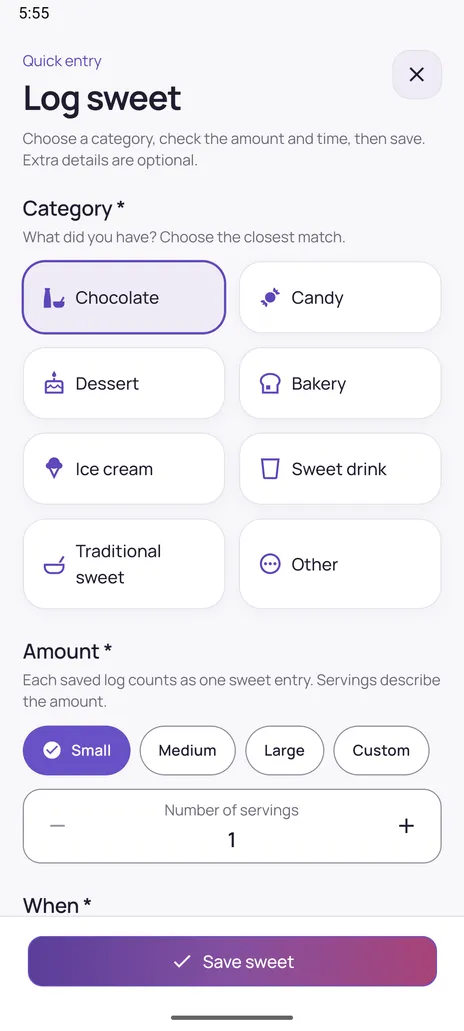
In Quit Sweet, choose Sweet drink in thesweet logging form, check the amount and time, and add a note if the cup or recipe needs explaining. Sugar grams and triggers are optional. Each saved log counts as one entry; the servings field describes the amount and does not multiply the goal count.
Choose a replacement for the part you enjoy
A replacement has to work in the same situation. If the familiar part is a cold drink with lunch, a hot drink you never prepare is unlikely to be a useful plan. Try matching the occasion first:
- Cold and fizzy: keep chilled, unsweetened sparkling water where you would normally reach for a can.
- A desk-side drink: take a water bottle to the desk before the work break starts.
- Sweet tea or coffee: try a little less added sugar in the same cup, or try an unsweetened version.
- A café order: ask what can be ordered without syrup or added sugar, and choose the size deliberately.
- A meal-deal drink: decide on water before choosing the rest of the meal.
These are options to test, not a list of drinks everyone must enjoy. The NHS guide above suggests water and sugar-free or no-added-sugar options and describes gradually reducing sugar in tea or coffee. Compare the actual product rather than assuming every drink in a category has the same recipe.
If changing every drink at once feels unworkable, begin with one repeat purchase. Keep broader questions about a total stop or gradual reduction in theguide to choosing a reduction approach. Here, the next decision is simply what you will order at the next usual occasion.
Read the label for the portion you actually drink
Check whether the sugar figure is per 100 ml, per serving, or per bottle before comparing two drinks. A smaller-looking number can describe a smaller portion. The FDA explanation of the Nutrition Facts label explains serving sizes and distinguishes total sugars from added sugars on US labels. Added sugars are already included in total sugars; do not add the two figures together.
Illustrative label calculation: if a drink lists 6 g of total sugar per 100 ml and you drink 250 ml, that portion contains 15 g. Drinking the full 500 ml bottle would make it 30 g. These numbers demonstrate the calculation, not a recommended intake or the contents of a particular brand.
Use the local label format on the product in front of you. If it already gives a whole-bottle figure and you drank the whole bottle, there is no need to multiply it again. For a homemade drink, note the ingredients you added; a café drink with unknown nutrition can remain an occasion-and-portion record.
Avoid mixing total-sugar figures for some drinks with added-sugar figures for others in the same comparison. In Quit Sweet, the optional sugar field is a manual entry, not a nutrition lookup. Put a short explanation in the note when needed, and leave an unknown amount blank. Blank and zero mean different things.
Plan for the purchase that keeps repeating
Turn the observation into one instruction you can use at the right moment. “I will take water to lunch on workdays” names a place and an action. “I should drink better” leaves the decision until you are already choosing.
Put the replacement where the decision happens: in the lunch bag, in the fridge, or on your shopping list. If you normally buy a drink on the way home, choose an alternative order before you reach the counter. For a shared tea round, tell the person making it how you want yours rather than relying on remembering after it arrives.
If you want something sweet, you can make a brief pause before deciding. Record the time and what happened, including a drink you still chose to have. Quit Sweet’s optional craving pauseoffers breathing and a delay; it does not promise to remove the craving. A replacement you can actually obtain matters more than completing a timer.
How do you know whether you are cutting back?
Compare the same things across recorded days: drink occasions, portion sizes, and sugar amounts only where known. For example, six 330 ml cans and four 500 ml bottles are 1,980 ml and 2,000 ml respectively. That is fewer purchases but slightly more drink. Sugar comparisons would also depend on each recipe.
Look for the occasion that changed and the one that resisted the plan. If lunch worked but the journey-home purchase stayed the same, adjust that purchase next. A missed record is a gap in the evidence, not proof that you had no sweet drinks.
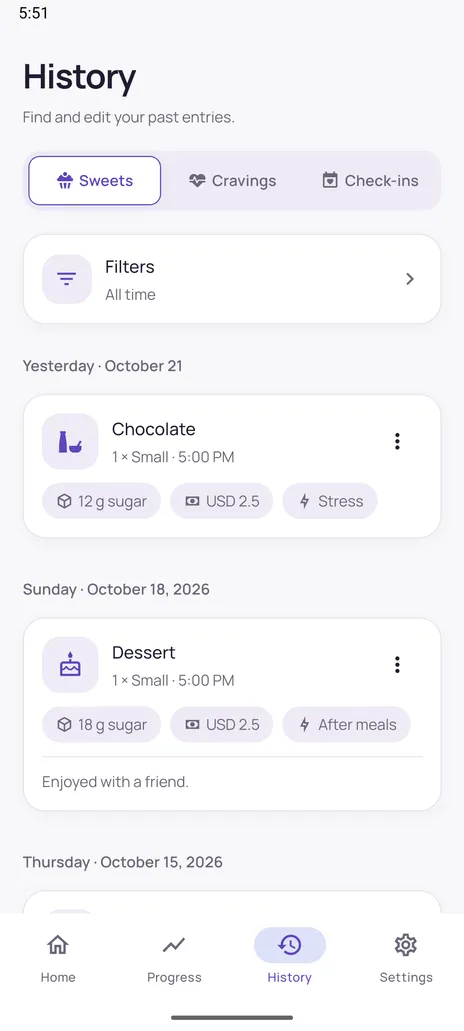
Quit Sweet’s History view groups entries by date and offers date-range filters. Review the Sweet drink entries and their notes when assessing this particular habit. The app’s overall goal andprogress totals cover all saved sweet entries; they are not a separate drink-only allowance or a measurement of your full diet.
Keep the next adjustment small enough to describe: change one order, prepare a replacement, or record a portion more accurately. You do not need to make the plan stricter just because one day differed from it.
Questions about cutting back on sweet drinks
What is a practical first step to stop drinking sugary drinks?
Write down the sweet drinks you have across an ordinary week, then choose one regular purchase to change. Decide on the replacement before that moment arrives. A plan such as taking water to lunch is more specific than trying to avoid every sweet drink from tomorrow.
Does sugar in tea or coffee count?
Yes. Sugar you add yourself counts as added sugar too. Record the cup size and how much sugar or syrup you use, rather than counting only packaged drinks. If you change the recipe, keep the cup size comparable so you can tell what changed.
Can I replace fizzy drinks with fruit juice?
Check the sugar content and portion first. Juice is not a sugar-free substitute simply because it comes from fruit. Water or unsweetened sparkling water can replace the drink without depending on a smaller juice portion. The NHS guide linked in this article explains juice and smoothie portions.
Do I have to record sugar grams for every drink?
No. If your aim is fewer purchases, record drink occasions and portions consistently. If you want to compare sugar amounts, use the label for the amount you actually drank. Keep an unknown amount blank rather than entering zero or guessing a precise figure.
Can Quit Sweet track only my sugary drinks?
Quit Sweet has a Sweet drink category for individual logs. Its goal counts cover all saved sweet entries, so a drink-only target needs to be reviewed separately from those overall totals. It does not scan barcodes or look up a drink’s nutrition information for you.
How quickly should I expect the habit to change?
There is no fixed schedule in this plan. Review after a week to see which purchases changed and whether your replacement was available. That review is a practical checkpoint, not a promise that a craving or habit will disappear within seven days.
Make the next usual drink easier to choose
Pick the occasion you know will happen again, choose an available replacement, and keep a record you can compare next week. A notebook is enough. The useful result is a clearer decision at that familiar moment and an honest account of what changed.